
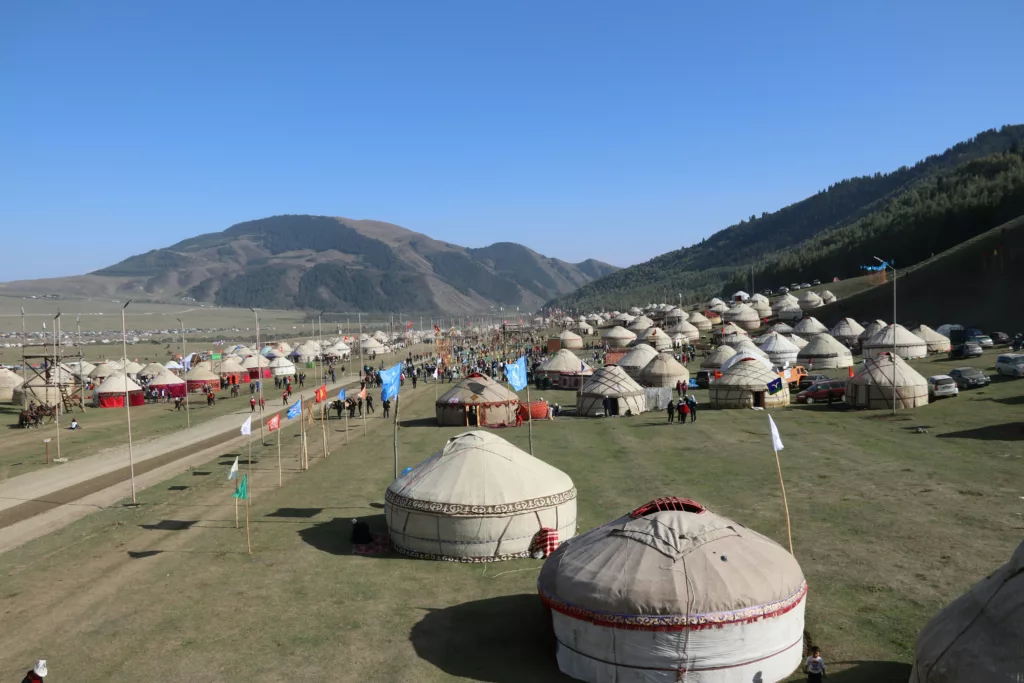
Culture & People
The Highlights of Kyrgyz Culture
Introduction
Kyrgyzstan is far more than just a destination for nature lovers. The country fascinates with its vibrant traditions, deeply rooted values, and warm hospitality. Between snow-capped mountains, endless steppes, and glittering lakes, a culture reveals itself that has been shaped by nomadism for centuries. Those who travel here experience not only breathtaking landscapes but also a people who proudly preserve their history, customs, and way of life.
The culture of Kyrgyzstan is closely connected to nature. Life in yurts, the love of horses, and the importance of community still shape the daily lives of many people today. Visitors can gain authentic impressions through traditional festivals, handicrafts, or culinary experiences such as the national dish Beshbarmak. Every encounter tells something about the deep relationship between people, animals, and the landscape.
Guided tours offer a valuable opportunity to get to know Kyrgyz culture in a respectful and in-depth way. Local guides provide insight into the everyday life of nomads, share knowledge about history and traditions, and facilitate encounters with local families. At the same time, they help promote cultural sensitivity and avoid misunderstandings. Thus, a journey through Kyrgyzstan becomes not only a discovery of nature but also a sustainable and enriching cultural exchange.
1. Culture is the Heart of Kyrgyzstan
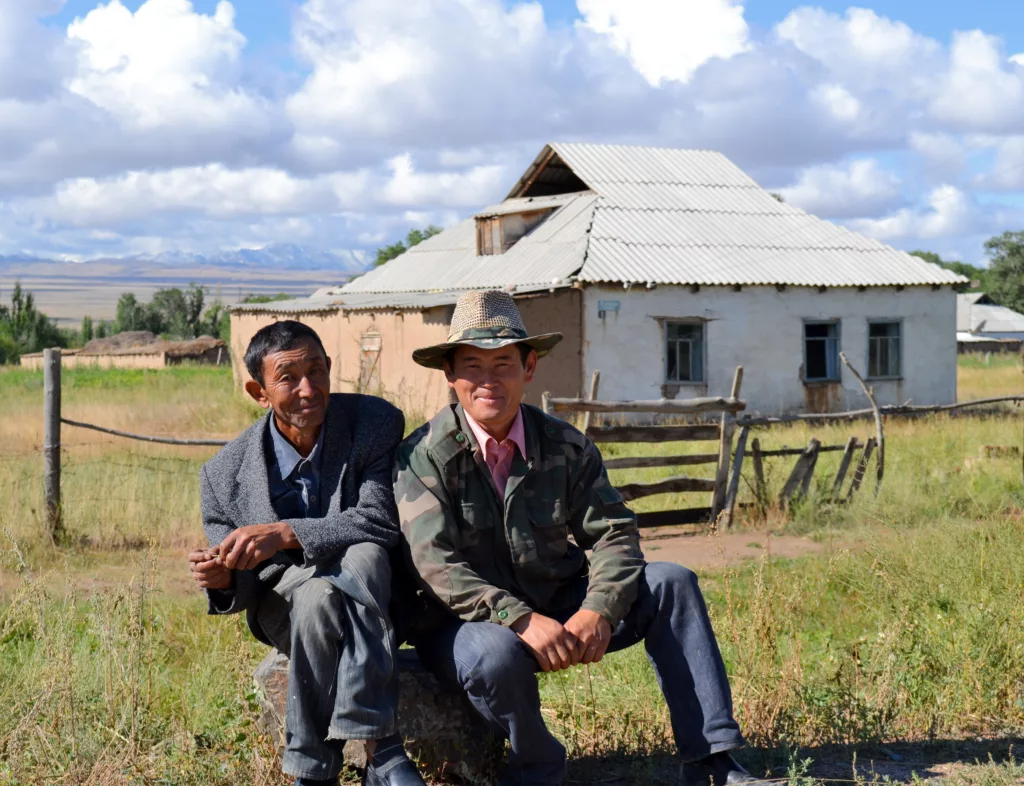
Kyrgyz culture is deeply rooted in nomadism. For centuries, people lived in the vast steppe, moving with their herds through the highlands and developing a way of life characterized by adaptability and respect for nature. Traditional values such as hospitality, solidarity, and pride in one’s heritage still shape social life today. Visitors traveling through rural areas are often spontaneously invited into yurts – a true expression of openness and mutual respect.
2. Life in the Yurt – Symbol of Freedom
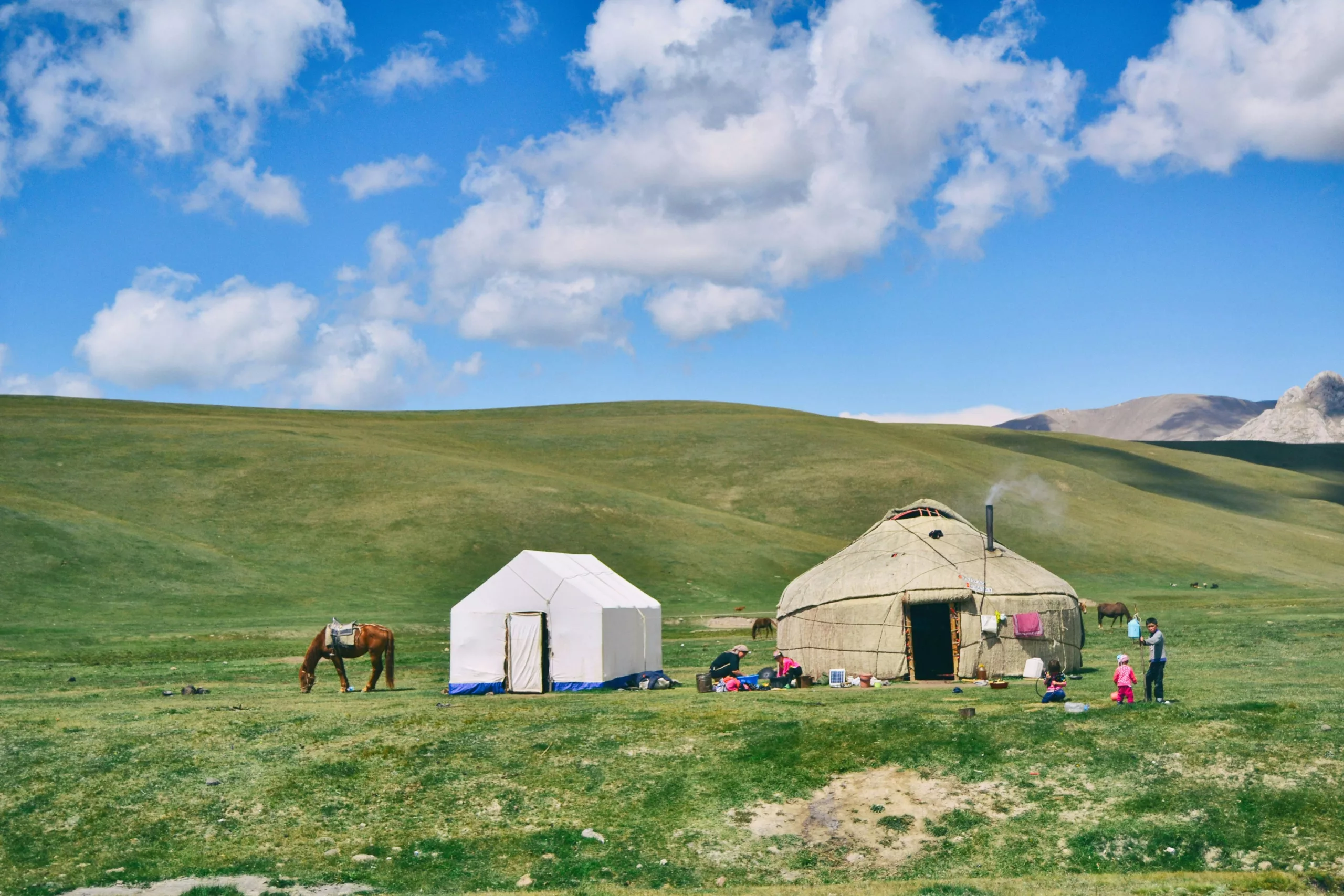
The yurt, the round felt tent of the nomads, is considered one of the most important symbols of Kyrgyz identity. It stands for freedom, mobility, and the close relationship between humans and nature. In remote valleys or on summer pastures, traditional yurt camps can still be experienced today, where families spend the summer months. Guided tours often offer the opportunity to stay overnight in such yurts and experience daily life up close – from cooking together and milking animals to storytelling by the evening fire.
3. Horses & Nomadism: A Centuries-Old Relationship
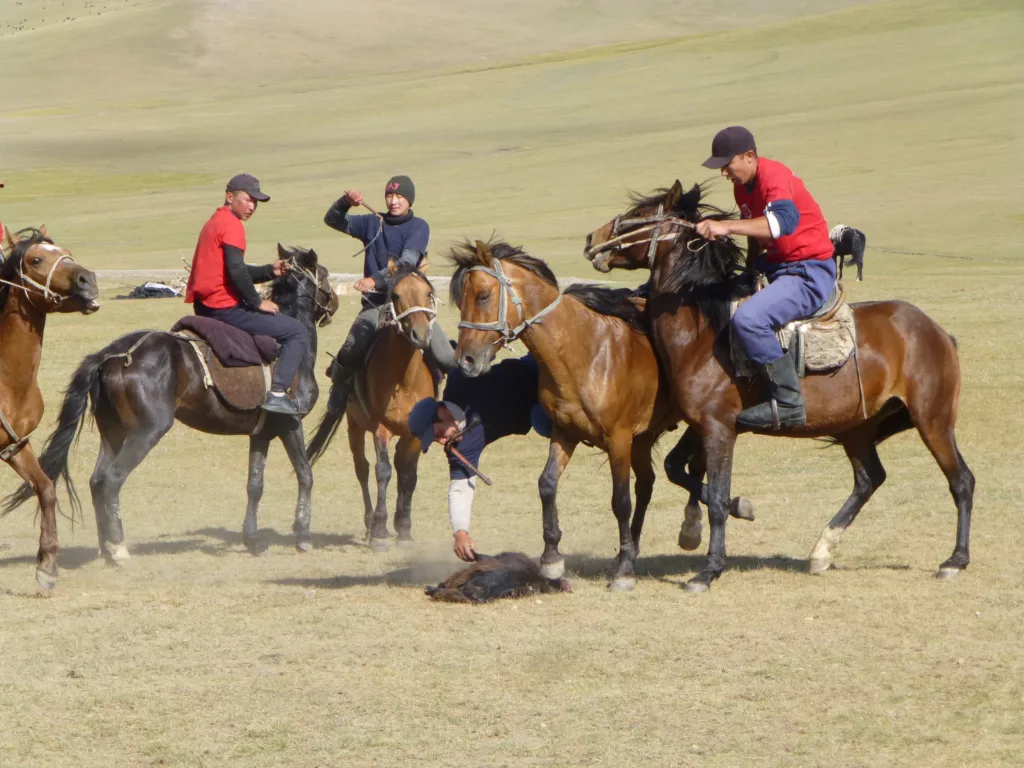
Hardly any other animal symbolizes Kyrgyzstan as strongly as the horse. Since ancient times, it has been the companion, means of transport, and status symbol of the nomads. Traditional horseback games such as Kok-Boru – a fast-paced game played with a goat carcass – demonstrate the skill and courage of Kyrgyz riders. On many journeys, one can observe the close relationship between humans and animals, for example during horse trekking in the Tian Shan mountains or by Lake Issyk-Kul.
4. Culinary Experiences: From Beshbarmak to Kumys
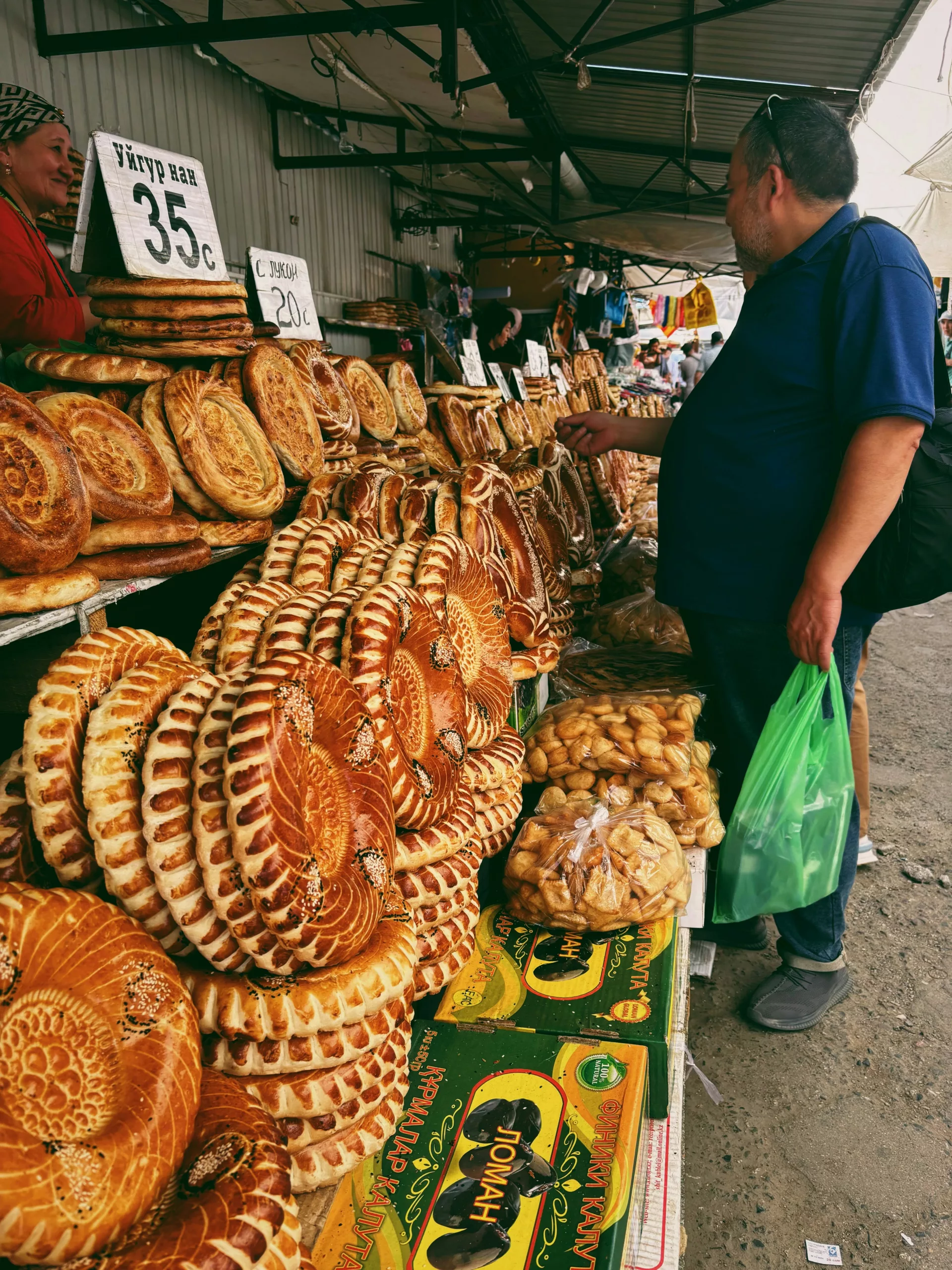
Kyrgyz cuisine is simple, hearty, and deeply connected to the nomadic way of life. The national dish Beshbarmak – boiled meat with noodles – is traditionally eaten with the hands and symbolizes community. Fermented drinks such as Kumys, fermented mare’s milk, are also part of everyday culinary life. Guided tours through Kyrgyzstan often include shared meals with local families – an ideal opportunity to experience the food culture authentically.
5. Music, Handicrafts and Festivals – Living Traditions
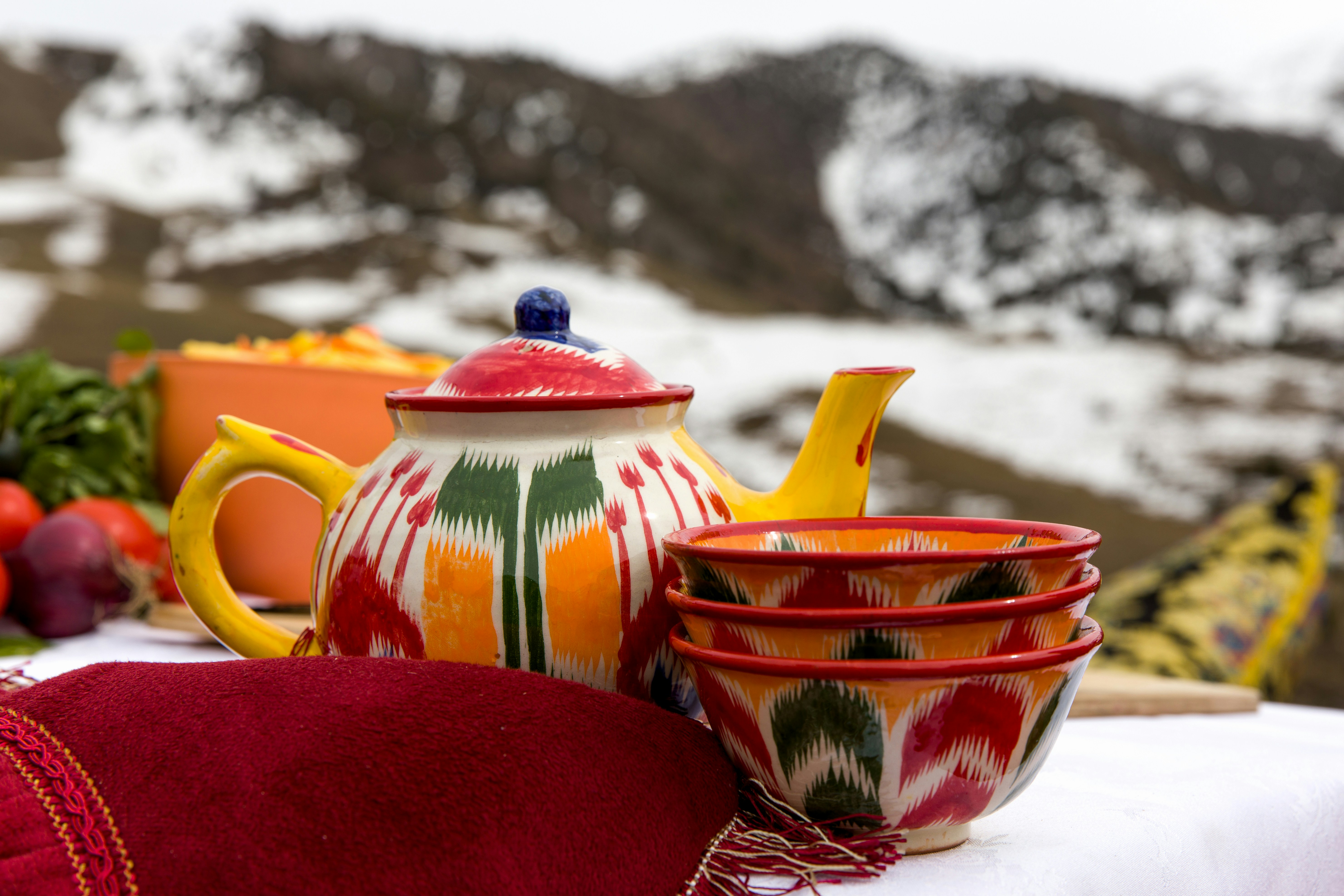
Music and handicrafts are an integral part of Kyrgyz identity. Instruments such as the Komuz, a three-stringed lute, tell stories from the nation’s history. At markets or village festivals, visitors can admire carpets, felt works, and jewelry decorated with traditional patterns. Cultural festivals are particularly impressive, where horseback games, dances, and songs reflect the vibrancy of this culture.
6. Encounters While Traveling: Respectful Cultural Exchange
Traveling through Kyrgyzstan always means encounters – with people, stories, and ways of life. A respectful approach to local traditions helps preserve cultural diversity. Guided tours build bridges between cultures by enabling exchange and ensuring that local communities benefit. In this way, guided journeys become an experience that goes beyond mere sightseeing – a genuine dialogue with a fascinating country.
Conclusion: Authentic Encounters that Last
Those who travel to Kyrgyzstan discover far more than just impressive landscapes – they encounter a vibrant culture shaped by freedom, community, and deep connection to nature. Whether living in a yurt, attending traditional festivals, or talking with hospitable nomads – every experience allows visitors to feel a piece of the real Kyrgyzstan.
The simplicity of everyday life, the importance of horses, music and handicrafts, as well as the heartfelt openness of the people make every journey an intense experience. Guided tours not only offer safety and comfort but also provide valuable cultural insights that often remain hidden when traveling alone.
In the end, it is these authentic encounters that make Kyrgyzstan so special – moments that stay in the heart and deepen the understanding of a culture where tradition and nature still exist in harmony today.